
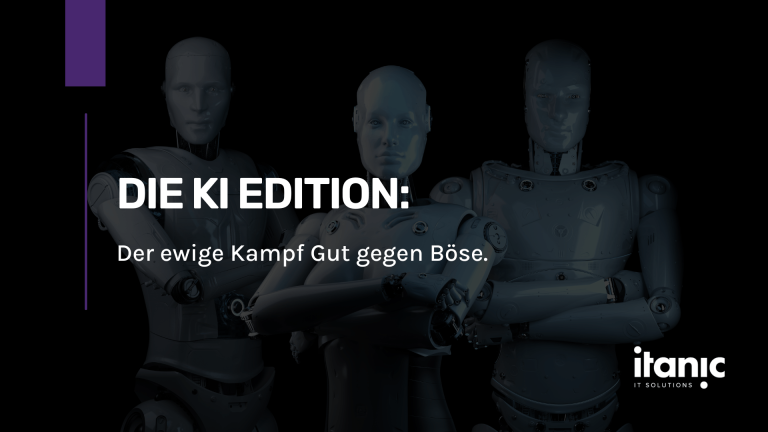
How Artificial Intelligence (AI) Is Transforming Cybersecurity
With every technological advance, the potential for misuse grows, especially when it comes to artificial intelligence (AI). AI is playing an increasingly important role both in cybersecurity and in the hands of cybercriminals.
Good AI vs. Evil AI
The accessibility and flexibility of AI make it attractive to businesses. However, these qualities also attract organized crime. AI-based cybersecurity solutions can process information more quickly and detect anomalies, making them powerful defensive tools. But there are two sides to every coin.
Bad guys are using artificial intelligence
Attackers can exploit defensive AI mechanisms to infiltrate systems. This can be done by taking advantage of configuration errors, which are then exploited further. Another example is “alert fatigue,” where too many false alarms lead to real threats being overlooked.
The Role of AI in Modern Cybersecurity
Defensive AI helps companies comply with regulations and detect network changes in real time. It plays a crucial role in monitoring and defending against attacks. However, companies must be cautious, as offensive AI can exploit these systems.
AI on offense and defense
A cat-and-mouse game is unfolding between defensive and offensive AIs. Attackers test security systems for vulnerabilities and attempt to manipulate them. Security experts are constantly working to strengthen and protect their AI systems.
Rescue via AI safety nets
New solutions promise to ensure the security of AI itself. These safety nets identify and eliminate vulnerabilities during the development and deployment phases. Such solutions could be crucial to protecting the integrity of AI-powered systems.
Conclusion
AI offers enormous opportunities for cybersecurity, but it also poses risks that must not be underestimated. The battle between good and bad AI is a central issue in modern IT security and requires constant attention and innovation.